
Industry · June 23, 2026 · 8 min read
Ski Mountaineering's Olympic Future Is Official:
Why Skimo Belongs in the French Alps 2030 Winter Games
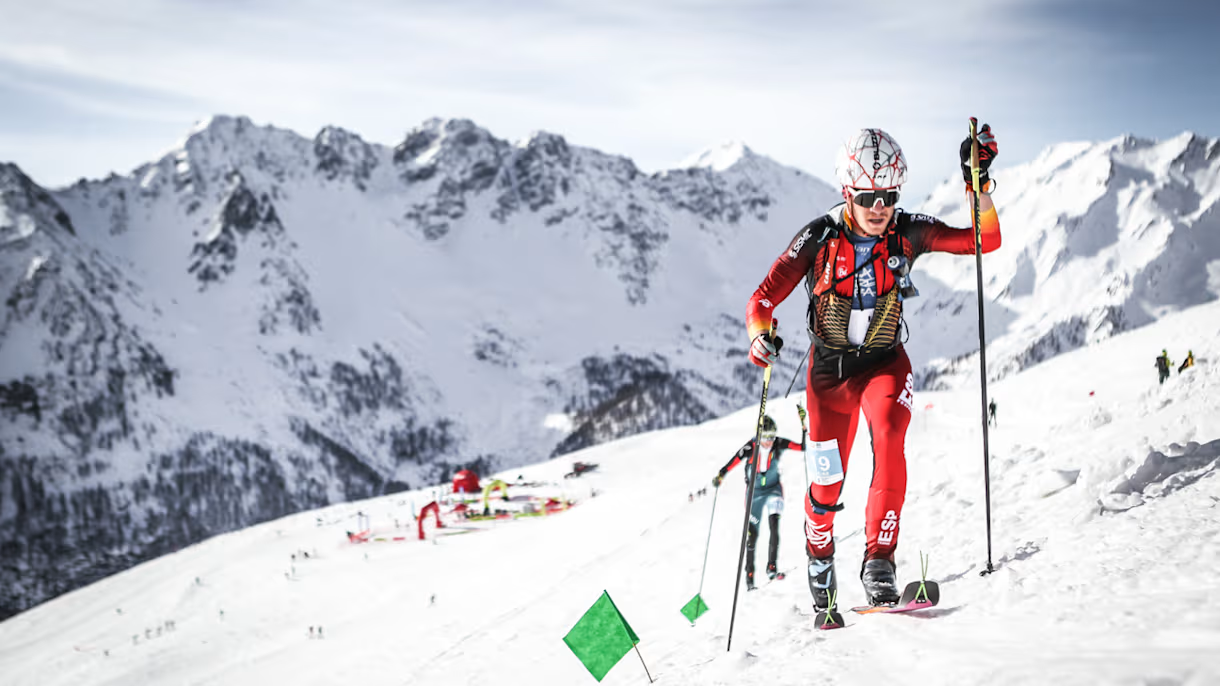
Ski mountaineering has officially earned its place in the next Winter Olympics. After making its Olympic debut at Milano Cortina 2026, the sport known to many athletes and fans as “skimo” has been approved for the French Alps 2030 Olympic Winter Games. The decision is more than a simple programme update. It is a signal that the Olympic movement is making room for a sport that feels both ancient and modern: rooted in mountain survival, shaped by Alpine culture, and built for a new generation of endurance athletes.
For ski mountaineering, approval for 2030 is a major milestone. For the Winter Olympics, it is a natural fit.
From Mountain Necessity to Olympic Sport
Long before ski mountaineering became a race format, it was a practical way to move through the mountains. Skiers climbed with skins attached to their skis, crossed high terrain, carried gear on their backs, and descended through natural snow. It was part exploration, part transportation, part survival skill.
Modern skimo racing turned that mountain craft into a high-speed competitive discipline. Athletes climb steep courses on lightweight skis, transition quickly into boot-packing sections, rip skins from their ski bases, lock their heels, and descend technical terrain before doing it all again. The best racers are not simply strong climbers or fearless skiers. They are complete mountain athletes.
That is what makes the sport so compelling. It combines endurance, power, technical skiing, equipment mastery, and decision-making under pressure. In a matter of minutes, athletes must manage heart rate, balance, gear changes, climbing rhythm, descending skill, and tactical positioning.
It is one of the few Olympic sports where the transitions are almost as dramatic as the racing itself.
Why the 2030 Approval Matters
Ski mountaineering's inclusion in the French Alps 2030 programme gives the sport something every emerging Olympic discipline needs: continuity.
A one-time Olympic appearance can introduce a sport to the world. A second Games can establish it. At Milano Cortina 2026, skimo arrived on the Olympic stage with a compact programme: men's sprint, women's sprint, and mixed relay. Those events were designed to be fast, understandable, and broadcast-friendly. They offered viewers a concentrated version of the sport: short climbs, technical transitions, steep descents, and head-to-head racing.
The 2030 approval suggests that the Olympic experiment worked. Skimo proved it could fit inside the Games without losing its identity. It showed that uphill skiing can be exciting to watch, that transitions can be moments of drama, and that a sport with deep mountain roots can also make sense in a modern Olympic broadcast.
Just as importantly, the 2030 Games will take place in the French Alps, a region where ski mountaineering is not an imported novelty. It is part of the landscape. The sport belongs culturally, geographically, and historically to the mountains that will host it.
A Bigger Stage and a Broader Programme
The 2030 approval is especially significant because ski mountaineering is expected to expand beyond its debut format. Instead of only showcasing sprint-style racing, the French Alps Games are set to include five medal events across sprint, individual, and mixed relay disciplines.
That matters because skimo is bigger than sprint racing. The sprint format is ideal for television — it is short, explosive, and easy to follow. But the individual race is closer to the traditional soul of ski mountaineering. It rewards sustained climbing ability, technical descending, pacing, efficiency, and all-around mountain competence. Adding individual events gives the Olympics a fuller picture of what skimo actually is.
For athletes, that expansion is huge. It creates more pathways to the podium and allows different types of racers to shine. A pure power athlete may thrive in the sprint. A complete endurance specialist may come alive in the individual race. A tactically sharp pair can turn the mixed relay into a showcase of teamwork and precision.
The Perfect Olympic Host for Skimo
The French Alps are an ideal stage for ski mountaineering's Olympic return. France has deep skimo traditions, elite athletes, iconic mountain terrain, and a public that understands the sport's language. The setting gives Olympic skimo something that newer sports sometimes lack: authenticity. The courses will not just be built in the mountains. They will be of the mountains.
Ski mountaineering is not meant to feel like a stadium sport placed on snow. Its appeal comes from the relationship between athlete and terrain. The climbs should hurt. The descents should demand skill. The transitions should reward practice. The landscape should be part of the drama. In the French Alps, skimo has the chance to present itself to the world in its natural environment.
Why Skimo Fits the Future of the Winter Olympics
The Winter Olympics are facing a complicated future. Climate change, venue costs, snow reliability, and questions about long-term relevance are all reshaping how host cities and sports federations think about the Games.
Ski mountaineering offers an interesting answer to some of those challenges. It is relatively low-infrastructure compared with many Winter Olympic sports. It does not require a sliding track, a massive stadium, or a purpose-built arena. Courses can be designed around existing mountain environments, ski areas, and alpine terrain. That does not make the sport simple to host, but it does align well with a more flexible and sustainable vision of the Winter Games.
It also speaks to a growing outdoor culture. Around the world, more people are discovering uphill skiing, backcountry touring, endurance mountain sports, and human-powered adventure. Skimo sits directly at the intersection of those trends. It is competitive, but it also connects to something broader: the desire to move through mountains under your own power.
The Opportunity for Athletes, Brands, and Fans
Olympic approval will accelerate skimo's growth. For athletes, it means clearer long-term goals, stronger federation support, and more visibility. Young racers can now dream not only of competing in World Cups, but of representing their country on the Olympic stage.
For national teams, it means investment. Olympic inclusion tends to bring coaching resources, development pipelines, sport science, and funding. Countries with strong Alpine traditions will be immediate contenders, but the sport's growth could also open doors for new nations willing to build programs early.
For brands, the opportunity is obvious. Skimo is an equipment-driven sport where every gram matters. Boots, bindings, skis, skins, packs, poles, helmets, and apparel all affect performance. Olympic visibility will push innovation and introduce more consumers to lightweight touring gear, breathable apparel, and mountain-specific design.
For fans, the sport offers something fresh. Skimo is easy to appreciate once you understand the basics: climb fast, transition cleanly, descend well, and repeat. The racing is tactical, painful, technical, and visually distinctive. It has the ingredients Olympic audiences tend to love: speed, suffering, risk, and moments where tiny mistakes can decide everything.
A Sport That Earned Its Place
Ski mountaineering's approval for the French Alps 2030 Winter Olympics feels less like an experiment and more like a homecoming. This is a sport born from the mountains, refined by athletes, and now recognized by the Olympic movement as part of winter sport's future. Its debut at Milano Cortina introduced skimo to a global audience. Its return in 2030 gives it the chance to grow into a permanent Olympic fixture.
The challenge now is to preserve what makes the sport special. Olympic skimo must be accessible enough for new fans, but authentic enough for the mountain community that built it. It must be broadcast-friendly without becoming artificial. It must grow without losing the grit, efficiency, and technical purity that define it.
If the French Alps 2030 organizers can strike that balance, ski mountaineering may become one of the most exciting additions to the Winter Olympics in a generation.
The sport has climbed its way onto the Olympic programme. Now it gets to show the world what happens when the race goes uphill.